United Parcel Service, Inc., a package delivery and logistics provider, offers transportation and delivery services.
UPS delivered first quarter results that look acceptable on paper but reveal deeper issues beneath the surface, sending shares down as much as 7.2 percent in their worst intraday decline since July. Adjusted earnings of $1.07 per share narrowly beat consensus expectations of $1.03, though this represents a steep 28 percent fall from $1.49 a year earlier. Revenue of $21.2 billion edged slightly ahead of forecasts but still declined 1.4 percent year over year.
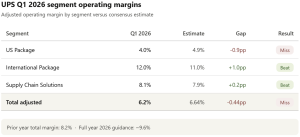
The most troubling figure is the collapse in profitability. Adjusted operating margin fell to 6.2 percent from 8.2 percent a year ago, with the US Domestic package business posting a particularly weak 4 percent margin against analyst expectations of 4.9 percent. This shortfall reflects ongoing difficulties matching costs to volumes as UPS deliberately reduces its exposure to low margin Amazon business. Total package volume dropped 7.8 percent and average daily volumes fell 7.7 percent, illustrating the scale of the volume reset currently underway.
The company has been compensating through pricing power, lifting average revenue per package by 7.7 percent to $15.32. International was the clear standout, growing revenue 3.8 percent and delivering 12 percent margins that comfortably exceeded estimates. Supply Chain Solutions revenue dropped 6.5 percent but still managed to beat margin expectations at 8.1 percent thanks to cost discipline.
Despite the soft start, management kept full year guidance unchanged at roughly $89.7 billion in revenue and a 9.6 percent adjusted operating margin. This is where investors should pause carefully. Achieving a 9.6 percent annual margin after printing only 6.2 percent in the first quarter requires a dramatic second half acceleration in earnings. JPMorgan analysts noted the second quarter operating margin guide now requires an even stronger ramp up than previously anticipated, raising execution risk meaningfully.
External pressures are also building rapidly. Brent crude is trading near $120 a barrel due to the conflict in Iran, threatening consumer spending into the critical holiday season. The company also remitted $5 billion in potential tariff refunds to the Treasury, though management indicated any refunds will pass through without affecting earnings.
The overall takeaway is genuinely mixed and warrants caution. UPS retains strong international momentum and pricing discipline, but the core US business is under real operational stress, the underlying volume picture remains weak, and the unchanged full year outlook now carries materially higher execution risk. The market reaction reflects sensible scepticism rather than outright panic.