Market volatility measures how much and how quickly prices move, in either direction. It is a normal feature of share markets that tends to rise around economic data and central bank decisions, usually measured with the VIX or by standard deviation. How investors respond often matters as much to their results as the volatility itself.
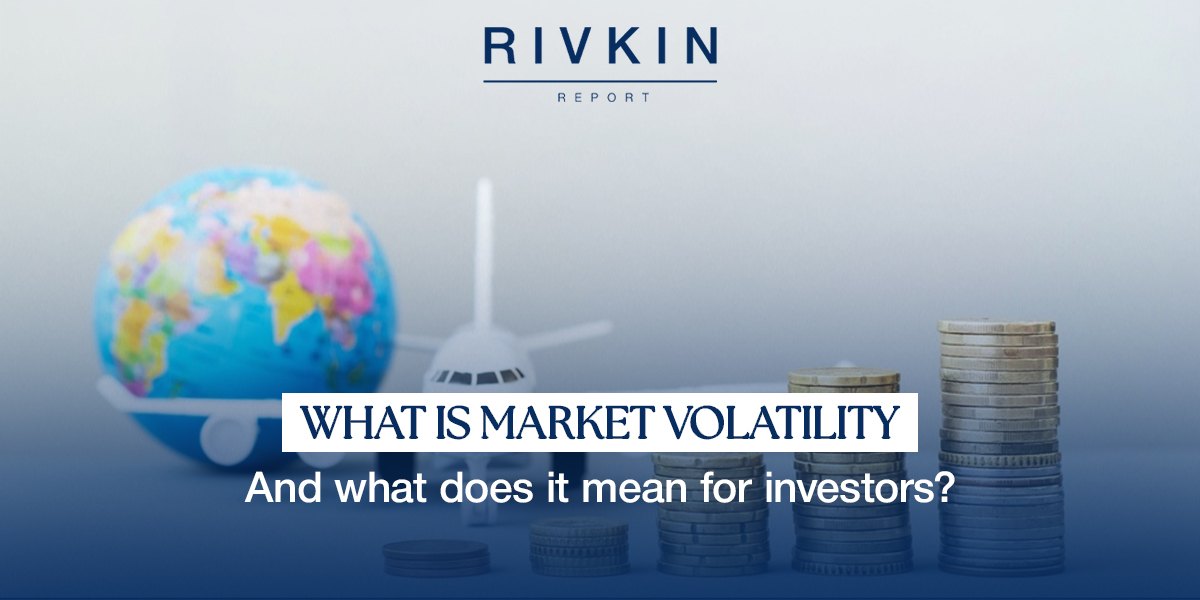
For anyone asking what market volatility is, it describes how far and how fast prices move over a given period, regardless of direction. It works much like the wind speed in a weather forecast, which tells you how rough conditions are likely to be without telling you which way the wind is blowing.
What Does Market Volatility Mean for Investors in Practice?
Standard deviation looks back, measuring how far returns have strayed from their average. The Cboe Volatility Index (VIX) looks forward, estimating expected volatility over the next 30 days from S&P 500 option prices.
A rising VIX generally reflects growing unease, which is why it is often called a fear gauge. Readings below 15 tend to reflect a calm market and the long-run average sits around 19 to 20, though in periods of stress it climbs far higher, closing at 80.86 on 20 November 2008 and at a record 82.69 on 16 March 2020. Australian investors can follow the S&P/ASX 200 VIX (XVI), which applies the same method to ASX 200 options.
Why Do Stock Markets Become Volatile?
Several recurring triggers drive periods of higher volatility, and they rarely act alone.
Economic Data Surprises
Inflation and employment figures that differ from expectations can reprice markets within minutes.
Central Bank Decisions
Rate decisions from the RBA or the US Federal Reserve move markets most when they catch investors off guard.
Corporate Earnings Season
Stocks can reprice quickly around half-yearly results on the ASX and quarterly results in the US, particularly when guidance disappoints or surprises.
Geopolitical Events
Conflicts and trade disputes add uncertainty, which markets price in through wider daily swings.
Liquidity Conditions
With fewer participants, such as during holiday periods, modest volumes can move prices further than usual.
Investor Sentiment and Positioning
When many investors hold the same positions, a small trigger can force a large move as those positions unwind.
How Does Market Volatility Affect Investments?
A long-term investor with a diversified portfolio may see paper losses in a volatile stretch without any change to their position, provided they don’t need to sell. A trader using leverage or holding a concentrated position can face a very different outcome from the same move, including losses larger than the amount invested.
Separating a change in a company’s outlook from ordinary market noise is the hard part of a volatile period. The Rivkin Report’s stock market research assesses company news against the longer-term numbers, and members receive portfolio alerts by email or SMS.
Is Market Volatility Good or Bad for Investors?
It depends on time horizon and behaviour. Lower prices can suit investors with cash to invest and a long horizon, although prices can keep falling after they buy. Volatility does the most damage to investors who are forced to sell in a downturn or who abandon a long-term plan out of short-term discomfort.
How to Invest During Market Volatility?
Maintain a Long-Term Time Horizon
Short-term swings matter less to an investor with a 10 or 20-year horizon than to someone who needs the money within a year or two.
Use Dollar-Cost Averaging
Investing a fixed amount at regular intervals buys more units when prices are lower, which can smooth the average entry price. It doesn’t guarantee a better result than a lump sum and doesn’t prevent losses in a falling market.
Avoid Panic Selling
Selling into a sharp fall locks in a loss that a recovery may otherwise have reversed. Wells Fargo Investment Institute found that from February 1994 to January 2024, missing the best 30 days of the S&P 500 cut the average annual price return from 8.0% to 1.8%, below average inflation of 2.5%. The best and worst days often fell close together, which makes it hard to avoid one without missing the other. These are past US index returns excluding dividends, and past performance is not a reliable indicator of future performance.
Keep a Diversified Portfolio
Spreading exposure across asset classes and regions limits the effect any single volatile holding has on the whole portfolio.
Review, Rather Than React
A volatile period is a reasonable prompt to check whether a portfolio still matches an investor’s goals and tolerance for risk.
Volatility Snapshot: Reading the VIX
| VIX Range | General Interpretation |
|---|---|
| Below 15 | Low volatility, general market calm |
| 15 to 25 | Moderate volatility, broadly normal conditions |
| 25 to 30 | Rising volatility, growing market concern |
| 30 and above | High volatility, historically associated with market stress |
Frequently Asked Questions
Does high volatility always mean the market is falling?
No. Volatility measures the size and speed of moves in either direction, so a sharply rising market is volatile too.
Is it safe to keep investing during a volatile period?
All share investments carry a risk of loss, and volatility doesn’t change that. Continuing a regular contribution plan avoids having to time a re-entry, though it doesn’t protect against further falls.
What is a normal level of stock market volatility?
A VIX reading in the mid-teens to low twenties has historically reflected typical conditions.
Can Australian investors access US markets during volatile periods?
Yes, through a licensed broker, although spreads can widen and prices move faster.
The Practical Read
Volatility is a permanent feature of share markets, and investors with a long horizon and a diversified portfolio are usually better placed to sit through it than those who may need to sell. The decisions made during a volatile stretch tend to matter more than the volatility itself.
The Rivkin Report covers ASX and US-listed companies, and its US Growth portfolio gives members a rules-based way to trade US stocks from Australia. Investors can start a 14-day free trial, with no card required.
General Advice Warning: This information is general advice only, prepared by Rivkin Securities Pty Ltd (AFSL 332802) without considering your objectives, financial situation, or needs. Before acting, consider its appropriateness to your circumstances and review relevant PDS/TMD documents. Investing involves risk, including loss of capital. Past performance is not a reliable indicator of future results.
Tax Disclaimer: Tax information is general and based on ATO guidance. Rivkin does not provide tax advice. Consult a registered tax agent before acting.